
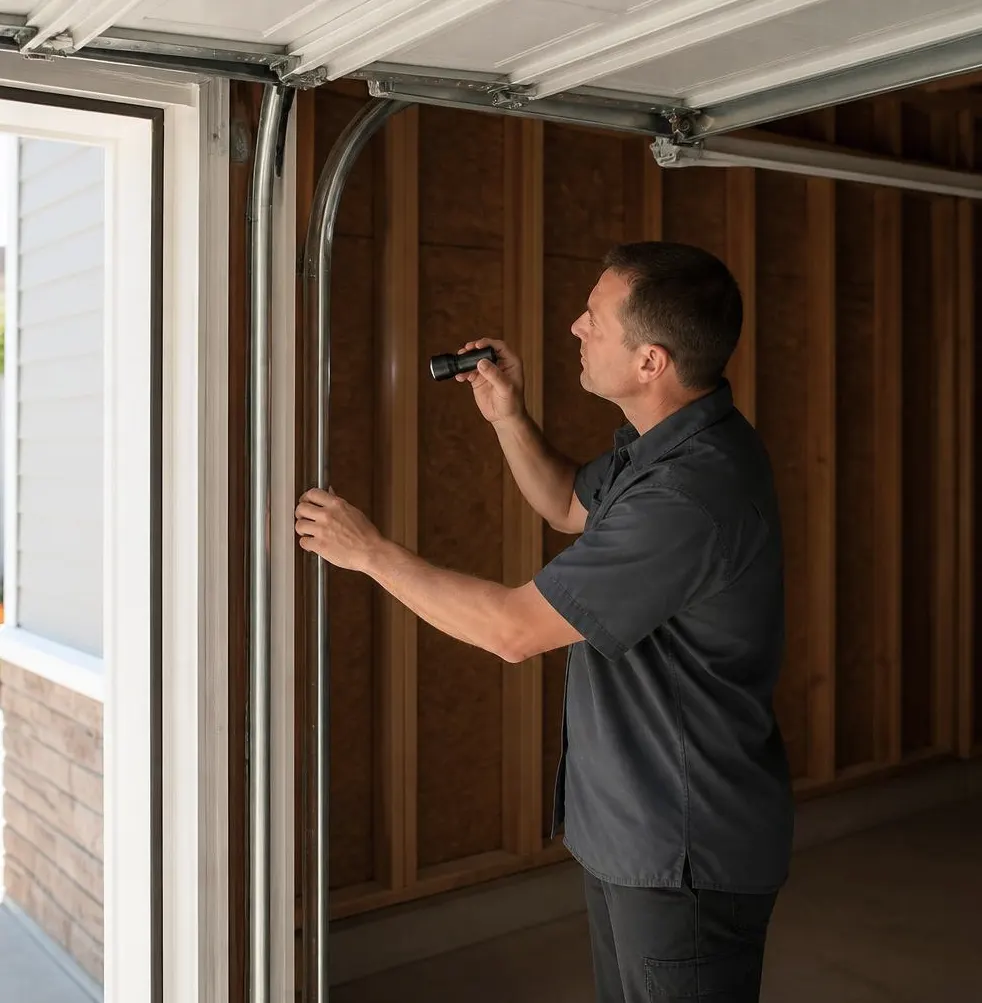
You pull into the driveway after dark, hit the opener, and the door groans partway up before stopping. Or it closes with a new rattle it didn't have in October. Nothing is broken yet, but something has changed, and the first real cold snap of the season has a way of making every weak point in a garage door announce itself at once.
This is the window to deal with it. Once the freeze-thaw cycles settle in and the salt trucks start running, small issues turn into stuck doors, dead openers, and springs that snap on the coldest morning of the year.
Why This Time of Year Is Different
Garage doors don't fail because of cold alone. They fail because of what cold does to materials that were already worn: metal contracts, lubricant thickens or washes out, rubber seals stiffen and crack, and moisture that gets into tracks or hinges freezes and expands. Add in humidity held over from summer, the occasional nor'easter driving wind and water sideways into the garage, and road salt tracked in on tires and boots, and you've got a season that's genuinely harder on a garage door than any other.
Homes with original doors and hardware feel this first. Older torsion springs, aging bottom seals, and opener units from a different decade weren't built with today's weather swings in mind, and they show their age exactly when you need the door most.
Start With the Seal at the Bottom
The bottom weatherstripping is your first line of defense against snowmelt, slush, and cold air, and it's also the part that takes the most abuse. Walk out and look at it in daylight:
- Cracked, flattened, or torn rubber lets in water that can freeze the door to the slab overnight
- Gaps at the corners let drafts in and let salt-laden slush track onto the garage floor
- A seal that's pulled loose from its track won't compress evenly, which strains the door as it closes
Replacing this strip is one of the lower-cost fixes you can make before winter, and it does real work against both cold air and the freeze-to-the-floor problem that shows up after an icy night.
Check the Hardware While It's Still Mild
Hinges, rollers, and tracks all move more stiffly in the cold, and dried-out or rusted hardware makes that worse. A few things worth doing now, while temperatures are still manageable:
- Lubricate moving parts with a garage door-specific lubricant, not household oil, which can gum up or thin out unpredictably in the cold
- Tighten loose hardware — bolts and brackets work themselves loose over a year of regular use, and vibration from a stiff winter door accelerates that
- Inspect rollers for flat spots or cracking, especially on doors that are more than a decade old
- Clear tracks of dust, leaves, and grit before the first snow, since debris plus moisture is what turns into ice inside the track
About Those Springs
Torsion springs lose a bit of flexibility as temperatures drop, and a spring that's already near the end of its lifespan is far more likely to fail on a cold morning than a mild one. If your door has felt heavier when opened manually, if the opener strains more than it used to, or if you can see gaps or stretching in the spring coils, that's not a wait-and-see situation. Spring replacement is not a DIY repair — these are under heavy tension and can cause serious injury — but it's exactly the kind of thing worth having checked before winter rather than after a failure locks you out of the garage.
Don't Ignore the Opener
Openers work harder in cold weather, pulling against stiffer springs and heavier, sometimes slightly swollen wood doors. Symptoms to watch for heading into winter:
- The door reverses unexpectedly partway through closing
- The motor runs longer than usual before the door moves
- Remote range seems shorter, or the opener responds inconsistently
- Safety sensors near the floor get knocked out of alignment by salt residue, snow shovels, or stored items
A quick alignment check on the sensors and a look at the opener's force settings now can prevent a dead stop in the driveway during the first real cold spell.
A Simple Pre-Winter Walkthrough
- Open and close the door manually, listening for new grinding, popping, or scraping sounds
- Check weatherstripping at the bottom and sides for cracks or gaps
- Lubricate hinges, rollers, and the torsion spring
- Tighten visible bolts and brackets
- Test the auto-reverse safety feature by placing an object in the door's path
- Clear tracks of debris and wipe away surface rust where you see it starting
None of this takes more than an hour, and doing it now, before the first hard freeze, is a lot easier than troubleshooting a stuck door in 20-degree weather.
When to Call Medford Garage Door
If your walkthrough turns up a spring that looks worn or stretched, an opener that's reversing or straining, or a door that's noticeably heavier or slower than it used to be, that's the point to call in a technician rather than keep adjusting things yourself. Medford Garage Door handles spring replacement and garage door opener repair for homes throughout Medford, Medford Lakes, Marlton, Mount Laurel, and the surrounding area, and a seasonal maintenance visit can catch the smaller issues — loose hardware, worn seals, misaligned sensors — before they turn into a door that won't open on the first icy morning of the year.
If your garage door is due for a pre-winter check, or something already sounds or feels off, call Medford Garage Door today to get it sorted before the cold really sets in.